
Vital Signs Chart PDF: A Comprehensive Guide (Updated May 3, 2026)

Pediatric vital signs references, including heart rate, respiratory rate, and blood pressure, are readily available as PDF downloads from sources like pedscases.com.
What are Vital Signs?
Vital signs are measurements reflecting essential body functions, providing insights into overall health status. These key indicators – heart rate, respiratory rate, blood pressure, and body temperature – are routinely monitored by healthcare professionals. A vital signs chart PDF serves as a crucial tool for systematically recording and tracking these measurements over time.
Understanding these signs is paramount for early detection of potential health issues. Changes from a patient’s baseline, or values falling outside normal ranges, can signal underlying medical conditions requiring immediate attention. Accessing reliable vital signs chart PDFs, like those referencing PALS Guidelines (2015) for pediatric cases, ensures standardized data collection and interpretation.
These charts aren’t merely data repositories; they facilitate informed clinical decision-making, enabling healthcare providers to assess a patient’s response to treatment and adjust care plans accordingly. Properly documented vital signs, often found within a PDF format, contribute significantly to comprehensive patient care.
The Importance of Vital Sign Charts
Vital sign charts, often accessed as convenient PDF documents, are indispensable in healthcare for consistent patient monitoring. They provide a structured format for recording crucial physiological data – heart rate, respiratory rate, blood pressure, and temperature – enabling trend analysis and early anomaly detection.
The value of a well-maintained chart extends beyond immediate assessment. PDF versions facilitate easy sharing and archiving of patient information, crucial for continuity of care. Resources like pedscases.com offer vital signs chart PDFs specifically tailored for pediatric assessments, referencing PALS Guidelines (2015) for age-appropriate norms.
Accurate documentation within these charts supports effective communication among healthcare teams, informs treatment decisions, and serves as a legal record of patient status. Utilizing standardized PDF charts minimizes errors and ensures comprehensive, reliable data for optimal patient outcomes.
Understanding the Components of a Vital Signs Chart
A comprehensive vital signs chart PDF typically includes dedicated sections for each core measurement: heart rate, respiratory rate, blood pressure (systolic and diastolic), and body temperature. These charts often incorporate age-specific normal ranges, facilitating quick identification of deviations.
Many PDF templates, like those found referencing PALS Guidelines (2015) via pedscases.com, include columns for documenting measurements while awake and asleep, acknowledging physiological variations. Some charts also feature space for recording pulse oximetry readings and pain levels, offering a holistic view.
Essential elements include clearly labeled fields, units of measurement (beats/min, breaths/min, mmHg, °C/°F), and a designated area for date, time, and the healthcare provider’s initials. A well-designed PDF ensures accurate data capture and easy interpretation.

Core Vital Signs & Their Measurement
Vital signs chart PDFs detail measuring heart rate, respiratory rate, blood pressure, and temperature, crucial for assessing a patient’s overall physiological status effectively.
Heart Rate: Assessing Cardiovascular Function
Heart rate, a core vital sign, reflects cardiovascular efficiency and is meticulously documented on vital signs chart PDFs. These charts often delineate normal heart rate ranges by age, crucial for pediatric assessments, referencing guidelines like PALS (2015).
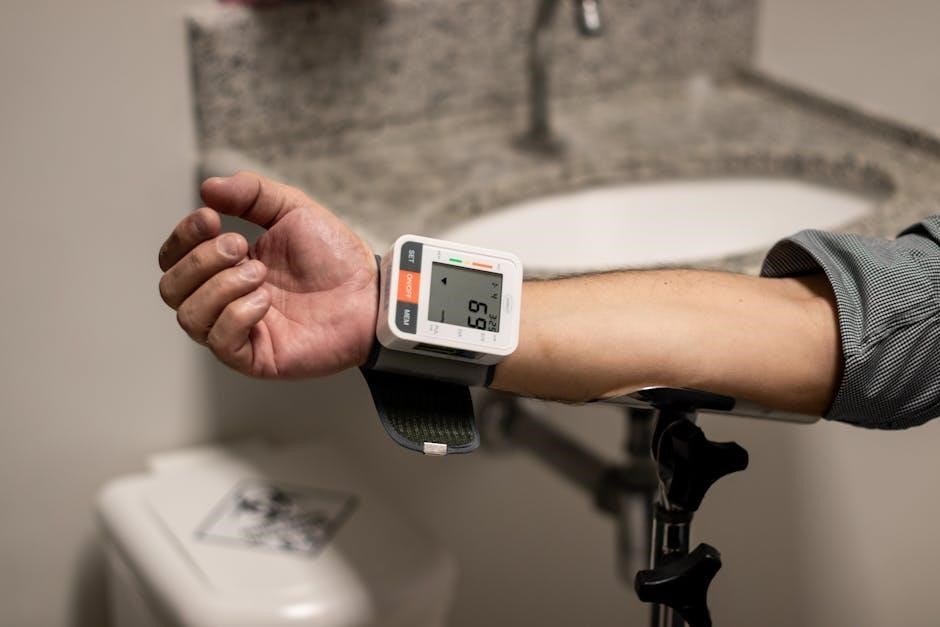
A PDF resource will illustrate deviations – tachycardia (elevated rate) and bradycardia (decreased rate) – and their potential implications. Understanding these variations is paramount. Charts frequently present age-specific norms; for instance, pediatric rates differ significantly from adult baselines.
Reliable PDF charts from sources like pedscases.com (Dr. Chris Novak & Dr. Peter Gill) provide clear reference points. Accurate heart rate assessment, coupled with proper documentation on a standardized chart, aids in timely intervention and improved patient outcomes. Consistent monitoring, as facilitated by these charts, is essential.
Normal Heart Rate Ranges by Age (PDF Reference)
Vital signs chart PDFs, particularly those adhering to PALS Guidelines (2015), detail age-specific normal heart rate ranges. These PDF resources categorize rates for infants, children, and adolescents, recognizing physiological variations. Newborn heart rates typically range from 110-160 bpm, gradually decreasing with age.
A comprehensive PDF will present tables outlining these ranges – for example, awake versus asleep rates. Pediatric charts from pedscases.com (Novak & Gill) offer a clear visual representation. Accessing these PDF documents ensures clinicians have readily available, evidence-based references.
Understanding these norms is critical for accurate assessment. Deviations warrant further investigation. Reliable PDF charts simplify this process, providing a quick and accessible guide to expected heart rate values across different pediatric age groups, supporting informed clinical decision-making.
Tachycardia and Bradycardia: What They Indicate
Vital signs chart PDFs, referencing guidelines like PALS (2015), clearly define tachycardia and bradycardia as deviations from normal heart rates. Tachycardia, an elevated heart rate, can signal fever, dehydration, pain, or underlying cardiac issues in pediatric patients. Conversely, bradycardia – a slower rate – may indicate hypoxia or certain medications.
These PDF resources emphasize age-specific thresholds. What constitutes tachycardia for a newborn differs significantly from an older child. Charts from sources like pedscases.com provide these crucial distinctions.
A well-structured PDF will not only define these terms but also suggest potential causes and initial assessment steps. Recognizing these abnormalities, guided by a reliable PDF, is paramount for prompt intervention and improved patient outcomes. Accurate interpretation, aided by these charts, is essential for effective pediatric care.
Respiratory Rate: Evaluating Breathing Efficiency
Vital signs chart PDFs are indispensable for accurately assessing respiratory efficiency, particularly in pediatric cases. These charts, often referencing PALS guidelines (2015), detail normal respiratory rate ranges based on age – a critical distinction. Observing breaths per minute provides insight into a patient’s ventilatory status.
A comprehensive PDF resource will highlight that respiratory rate is more than just a number; it reflects the body’s attempt to maintain oxygenation and eliminate carbon dioxide. Deviations from the norm can indicate respiratory distress or underlying medical conditions.
Resources like pedscases.com offer downloadable PDF charts that simplify this assessment. Utilizing these charts ensures consistent and reliable data collection, aiding in early detection of respiratory compromise and informing appropriate clinical decisions.
Normal Respiratory Rate Ranges by Age (PDF Reference)
Vital signs chart PDFs, particularly those aligned with PALS Guidelines (2015), provide crucial age-specific respiratory rate ranges. These PDF resources, such as those available from pedscases.com, are essential for accurate pediatric assessment.
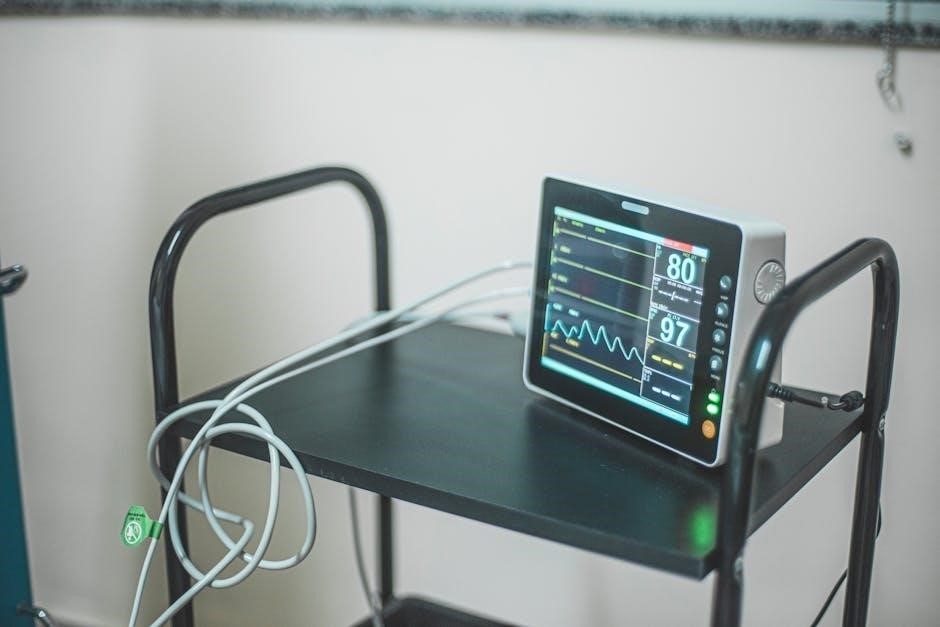
Newborns typically exhibit a respiratory rate of 30-60 breaths per minute, gradually decreasing with age. Infants (1-12 months) generally fall within 30-60 breaths/min, while toddlers (1-3 years) range from 24-40 breaths/min. Preschoolers (3-5 years) have a normal rate of 22-34 breaths/min, and school-age children (6-12 years) breathe 18-30 times per minute.
Accessing a detailed PDF chart allows healthcare professionals to quickly reference these ranges and identify potential abnormalities. These charts often present data in a clear, tabular format, facilitating efficient clinical practice and informed decision-making.
Bradypnea and Tachypnea: Identifying Abnormalities
Vital signs chart PDFs are invaluable tools for recognizing respiratory distress, specifically identifying bradypnea (abnormally slow breathing) and tachypnea (abnormally rapid breathing). Utilizing PDF references aligned with PALS Guidelines (2015) ensures consistent assessment.
Bradypnea, generally defined as a respiratory rate below the age-specific normal range, can indicate central nervous system depression, hypothermia, or opioid overdose. Conversely, tachypnea—a rate exceeding normal limits—often signals respiratory infection, asthma exacerbation, or metabolic acidosis.
Detailed PDF charts provide clear thresholds for these abnormalities across different age groups. Prompt identification, guided by these resources, is crucial for initiating appropriate interventions. Accurate documentation, facilitated by readily available PDF formats, is essential for effective patient care and tracking response to treatment.
Blood Pressure: Measuring Circulatory Force
Blood pressure, a critical vital sign, reflects the force of blood against artery walls. Vital signs chart PDFs are essential for interpreting readings, particularly in pediatric cases where normal ranges vary significantly with age. Resources like those from pedscases.com offer comprehensive PDF references.
These charts typically display systolic and diastolic pressures alongside age-specific norms. Identifying systolic hypotension, especially in newborns (less than 1 kg), is crucial, as indicated in referenced PDF materials. Accurate measurement and interpretation, guided by these PDF resources, are paramount.
PDF formats allow for easy access and standardized assessment. Consistent use of these charts ensures healthcare professionals can quickly identify deviations from normal, facilitating timely intervention and improved patient outcomes. Proper documentation, supported by PDF accessibility, is also key;
Normal Blood Pressure Ranges by Age (PDF Reference)
PDF vital signs charts provide crucial age-specific blood pressure ranges, differing significantly from adult norms. Resources like pedscases.com offer detailed PDF references outlining systolic and diastolic expectations across various pediatric age groups. These charts are invaluable for accurate assessment.
Newborns, particularly those under 1 kg, exhibit unique blood pressure parameters detailed within these PDF guides. Systolic hypotension is a key concern highlighted in these resources. Accessing these PDF documents ensures clinicians utilize current, evidence-based standards.
The availability of these PDF charts streamlines clinical practice, enabling rapid comparison of measured values against age-appropriate norms. Consistent use of these standardized PDF references minimizes errors and supports optimal patient care, particularly in pediatric settings.
Hypertension and Hypotension: Understanding the Risks
PDF vital signs charts often include cautionary notes regarding hypertension and hypotension, emphasizing the potential risks associated with both conditions. Elevated blood pressure, or hypertension, can signal underlying cardiovascular issues, demanding prompt investigation as detailed in referenced PDF guides.
Conversely, hypotension – particularly systolic hypotension in newborns as highlighted in PDF resources – can indicate shock, dehydration, or other critical states. These PDF charts serve as a quick reference for identifying potentially dangerous deviations from normal ranges.
Understanding these risks, as outlined in comprehensive PDF documents, is paramount for effective clinical decision-making. Utilizing these PDF resources allows healthcare professionals to swiftly recognize and address blood pressure abnormalities, ultimately improving patient outcomes and ensuring timely interventions.
Body Temperature: Detecting Fever and Hypothermia
Vital signs chart PDFs are crucial for accurately assessing body temperature, enabling the swift detection of fever or hypothermia. These PDF resources typically outline normal temperature ranges, providing a benchmark for comparison during patient evaluations.
A PDF guide will often detail various methods of temperature measurement – oral, rectal, axillary, and tympanic – acknowledging potential variations and associated accuracy levels. Recognizing deviations from the norm, as presented in these PDF charts, is vital for initiating appropriate medical interventions.
Fever can indicate infection, while hypothermia suggests exposure to cold or underlying metabolic issues. Comprehensive PDF documents emphasize the importance of consistent monitoring and documentation, facilitating informed clinical decisions and improved patient care.
Normal Body Temperature Ranges (PDF Reference)
Vital signs chart PDFs consistently present normal body temperature as 98.6°F (37°C), though a range of 97°F (36.1°C) to 99°F (37.2°C) is generally accepted. These PDF resources often highlight that temperature can fluctuate based on measurement site and individual factors.
Reliable PDF guides will specify variations: oral temperatures are typically slightly lower than tympanic (ear) readings, while axillary (armpit) temperatures are generally the least accurate. Accessing a detailed PDF chart allows healthcare professionals to quickly reference these nuances.

Furthermore, PDF documents often include age-specific considerations, noting that infants and young children may have slightly different normal ranges. Utilizing a comprehensive PDF ensures accurate interpretation and appropriate clinical response to temperature readings.
Methods of Temperature Measurement
Vital signs chart PDFs detail several temperature measurement methods, each with its advantages and disadvantages. Oral readings, common for cooperative patients, are quick but can be affected by recent food or drink intake. Tympanic (ear) thermometers offer rapid results, though accuracy depends on proper probe placement, as detailed in PDF guides.
Axillary (armpit) measurements are non-invasive but less precise, often used as a screening tool. Rectal temperatures, considered the gold standard for infants, provide the most accurate core temperature, as explained in many PDF resources.
PDF charts emphasize the importance of documenting the measurement method alongside the temperature reading. Temporal artery thermometers, offering non-invasive forehead scanning, are also increasingly common. Comprehensive PDFs will outline proper technique for each method, ensuring reliable data collection.
Pediatric Vital Signs: Specific Considerations
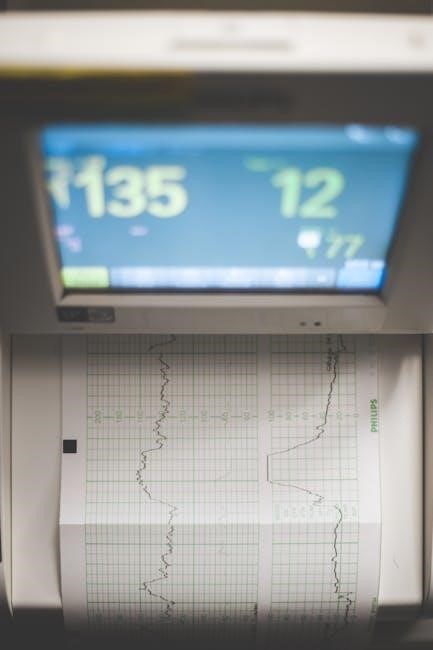
PDF resources highlight that pediatric vital signs differ significantly from adult norms; PALS Guidelines (2015) provide age-specific reference charts for accurate assessment.
Pediatric Normal Ranges: Heart Rate, Respiratory Rate, Blood Pressure (PALS Guidelines, 2015)
PALS Guidelines (2015) offer crucial PDF-accessible reference charts detailing normal vital signs for pediatric patients, categorized by age. Normal heart rates vary widely: newborns (birth to 1 month) typically range from 120-160 bpm, infants (1-12 months) from 80-160 bpm, toddlers (1-3 years) from 80-130 bpm, and school-age children (3-10 years) from 70-120 bpm.
Respiratory rates also demonstrate age-dependent variations. Newborns breathe at 30-60 breaths per minute, decreasing to 20-30 breaths per minute in infants, 20-30 breaths per minute in toddlers, and 15-20 breaths per minute in school-age children. Blood pressure norms are more complex and require age and gender-specific percentiles.
These PDF charts are invaluable for healthcare providers, enabling quick and accurate assessment of a child’s physiological status and facilitating timely intervention when deviations from normal ranges are observed. Accessing these guidelines ensures standardized care and improved patient outcomes.
Age-Specific Vital Sign Charts (PDF Availability)
Numerous organizations offer downloadable PDF versions of age-specific vital signs charts, catering to diverse healthcare needs. Resources like pedscases.com, created by Dr. Chris Novak and Dr. Peter Gill, provide readily accessible charts, last edited in March 2020 by Richard He. These charts are designed for quick reference during patient assessments.
These PDF documents typically categorize normal ranges for heart rate, respiratory rate, and blood pressure across different age groups – from newborns to adolescents. Some charts also include percentile ranges for blood pressure, offering a more nuanced evaluation.
The availability of these PDFs streamlines clinical workflows, allowing healthcare professionals to easily access and utilize standardized guidelines. Regularly updated versions ensure adherence to current best practices, promoting accurate patient monitoring and informed decision-making. Always verify the source and date of the PDF;
Vital Signs in Newborns: Unique Considerations
Assessing vital signs in newborns requires specialized attention, as normal ranges differ significantly from older children and adults. PDF resources, like those referencing PALS Guidelines (2015), are crucial for accurate interpretation. Newborn heart rates typically range from 110 to 160 beats per minute, while respiratory rates fall between 30 and 60 breaths per minute.
Blood pressure measurements in newborns are also unique, with systolic hypotension being a key concern. Charts available as PDF downloads often specify age-related systolic and diastolic ranges, aiding in the identification of potential cardiovascular issues.
Temperature regulation is another critical aspect; PDF guides detail appropriate methods for temperature assessment. Understanding these unique considerations, and utilizing reliable PDF references, is paramount for providing optimal neonatal care and early intervention when necessary.

Using and Interpreting Vital Signs Charts (PDF Format)
PDF vital signs charts from trusted sources, like pedscases.com, offer essential references for healthcare professionals needing quick access to normal ranges and guidelines.
Accessing Reliable Vital Signs Chart PDFs
Finding trustworthy vital signs chart PDFs is crucial for accurate patient assessment and care. Numerous online resources offer these charts, but verifying their source and adherence to current guidelines is paramount. Websites maintained by reputable medical organizations, such as the American Heart Association or pediatric emergency medicine groups like those providing the PALS Guidelines (2015), are excellent starting points.
Pedscases.com, as referenced, provides a valuable resource, offering charts specifically tailored for pediatric patients, edited for clarity and accuracy. When downloading PDF charts, ensure they are regularly updated – the example provided indicates a recent edit in March 2020, but newer versions are likely available as of May 3, 2026. Look for charts that clearly state their source, revision date, and the age groups they cover. Avoid charts from unknown or unverified sources, as these may contain outdated or inaccurate information, potentially leading to misdiagnosis or inappropriate treatment.
Key Elements to Look for in a Vital Signs Chart PDF
A comprehensive vital signs chart PDF should include clearly defined normal ranges for heart rate, respiratory rate, blood pressure, and body temperature, categorized by age group. Pediatric charts, adhering to PALS Guidelines (2015), are essential for younger patients, displaying age-specific norms for each vital sign.
The PDF should explicitly state the units of measurement (e.g., beats per minute, breaths per minute, mmHg). Look for distinctions between awake and asleep heart rate ranges, as noted in pediatric references. Blood pressure charts should ideally provide systolic and diastolic ranges, and potentially indicate values suggestive of hypotension. Charts from sources like pedscases.com demonstrate a focus on clarity and organization. Furthermore, a reliable chart will indicate the source and date of the guidelines used, ensuring accountability and allowing for verification of current standards.
Documenting Vital Signs Accurately
When utilizing a vital signs chart PDF for documentation, precision is paramount. Record all measurements with the correct units – beats per minute for heart rate, breaths per minute for respiration, and mmHg for blood pressure. Note any deviations from normal ranges immediately, referencing the PDF’s established parameters.
Clearly indicate the patient’s age and state (awake or asleep) alongside each reading, as pediatric norms differ significantly. If using a PDF based on PALS Guidelines (2015), explicitly mention this for audit trail purposes. Any interventions taken in response to abnormal vital signs must be meticulously documented, alongside the time of assessment and the healthcare provider’s signature. Consistent and accurate documentation, guided by a reliable PDF chart, is crucial for effective patient care and legal defensibility.

Advanced Considerations & Resources
Vital signs chart PDFs often complement pulse oximetry and pain scale integration, offering a holistic view of patient status for comprehensive assessment.

Pulse Oximetry: Monitoring Oxygen Saturation
Pulse oximetry is a crucial non-invasive technique frequently documented alongside traditional vital signs on comprehensive vital signs chart PDFs. It measures the percentage of hemoglobin saturated with oxygen in the blood, providing a key indicator of respiratory function and overall oxygenation.
Integrating pulse oximetry readings with other vital signs – heart rate, respiratory rate, blood pressure, and temperature – allows healthcare professionals to quickly identify potential issues like hypoxemia, respiratory distress, or circulatory compromise. Many printable vital signs chart PDFs include dedicated fields for SpO2 (peripheral oxygen saturation) recording.
When utilizing these charts, it’s essential to consider factors that can influence pulse oximetry accuracy, such as poor peripheral perfusion, nail polish, and ambient light interference. Consistent and accurate documentation, alongside a thorough clinical assessment, ensures optimal patient care and informed decision-making based on the complete vital signs picture presented within the PDF.
Pain Scale Integration with Vital Signs
Comprehensive vital signs chart PDFs are increasingly incorporating pain assessment scales alongside traditional physiological measurements. Recognizing pain as a vital sign itself is crucial for holistic patient care, as it significantly impacts other vital signs like heart rate, blood pressure, and respiratory rate.
Integrating a standardized pain scale – such as the Numeric Rating Scale (NRS), Visual Analog Scale (VAS), or Wong-Baker FACES Pain Rating Scale – into the PDF chart allows for objective pain quantification. This facilitates consistent monitoring and evaluation of pain levels over time, aiding in effective pain management strategies.
Healthcare professionals utilizing these charts should be trained in proper pain assessment techniques and documentation. Correlating pain scores with changes in other vital signs can provide valuable insights into a patient’s overall condition and response to interventions, enhancing the utility of the PDF as a complete patient assessment tool.
Where to Find Printable Vital Signs Charts (PDF Downloads)
Numerous online resources offer readily available vital signs chart PDFs for convenient download and printing. Websites like pedscases.com provide pediatric-specific charts, referencing PALS guidelines from 2015, ideal for quick reference in clinical settings. Searching for “printable vital signs chart PDF” yields a variety of options, including general adult and pediatric versions.
Healthcare professionals should prioritize charts from reputable sources, ensuring accuracy and adherence to current medical standards. Many hospital systems and medical organizations also offer their own customized PDF charts for internal use. Always verify the chart’s date to ensure it reflects the most up-to-date normal ranges and assessment protocols.
Before utilizing any downloaded PDF, review its content carefully to confirm it meets your specific needs and clinical requirements, guaranteeing effective patient monitoring and documentation.